



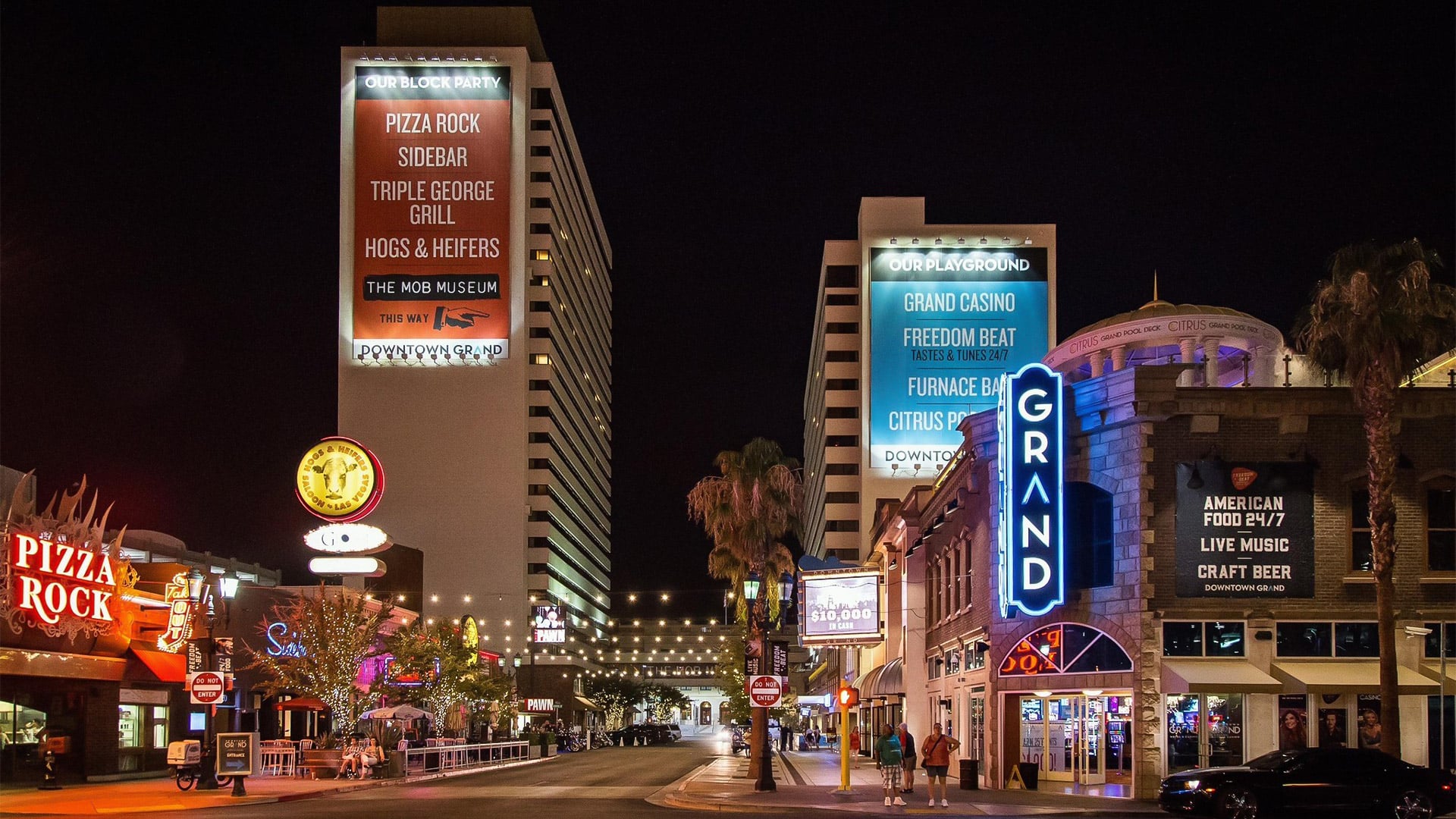
The Downtown Grand hotel-casino in Las Vegas, which has been operating under a court-appointed receiver since early January, is now being prepared for sale. The development comes after its owners defaulted on a $90 million construction loan, according to Clark County District Court records cited by the Las Vegas Review-Journal.
Banc of California has advanced its recovery efforts on the Downtown Grand property through a court-approved receivership and the upcoming sale process tied to the $90 million loan.
The Clark County District Court placed the hotel-casino and its ownership entities into receivership on January 5 at the request of Banc of California. An amended appointment order followed on January 6.
The court determined that the Downtown Grand and related LLCs constituted collateral for the loan and should be placed under third-party control. The request for a receiver was granted on a shortened time. Paul Huygens of Henderson-based Province LLC was appointed as receiver.
Default history outlines lender claims
According to court filings, the ownership entities secured an $82.5 million loan in 2019 to fund construction of a new hotel tower. The loan amount increased by $7.5 million in August 2020.
Banc of California, formerly Pacific Western Bank, filed a complaint on December 23 alleging that borrowers stopped making required interest payments on March 21, 2025, and did not repay the loan when it matured on August 19, 2025.
The lender also alleged the ownership group had been unable to pay obligations “as they come due” since at least July 2024 and described the entities as insolvent.
Receiver initiates sale preparation
A stipulation and order entered March 5 and noticed March 25 indicates that the receivership process is progressing. The filing states that Huygens has taken “possession and control” of the property and has “largely stabilized operations” with additional funding provided by Banc of California.
The receiver has started a pre-sale marketing effort. A 53-page confidential information memorandum has been prepared, and more than 500 documents have been uploaded to an online data room, according to a filling.
On January 31, sale materials were circulated to 162 prospective buyers. By mid-February, 25 parties had signed nondisclosure agreements and accessed the data room, while 17 groups participated in calls or meetings with the receiver’s team.
Huygens is expected to bring a motion “in the coming weeks” seeking court approval to establish a formal sales process.
Transaction structure defined under state law
The March 5 stipulation authorizes the receiver to proceed under Nevada’s Uniform Commercial Real Estate Receivership Act in connection with any sale.
Under the statute, a receiver may sell property free and clear of subordinate liens and redemption rights. The filing states this provision is intended to maximize value and streamline a future transaction. The law also affirms the receiver’s authority to manage contracts, leases, and vendor agreements while the property remains under court supervision.
Regulatory position remains under review
The Nevada Gaming Control Board declined to state whether the receiver requires temporary licensing or other approvals to operate the casino, reports the Review-Journal.
A spokesperson said the board “is aware of the situation at Downtown Grand, and we are monitoring it closely,” and declined further comment.
Court documents indicate the Downtown Grand continues to operate while under receivership. The receiver is working with existing staff and vendors during the sale preparation.
The March 5 order states that the amended receivership order entered on January 6 remains in effect, including all deadlines and requirements.
The next filing is expected to outline bidding procedures, a proposed timeline, and participation requirements for potential buyers, including whether a stalking-horse bidder will be identified. A closing timeline for any sale has not been disclosed.
