



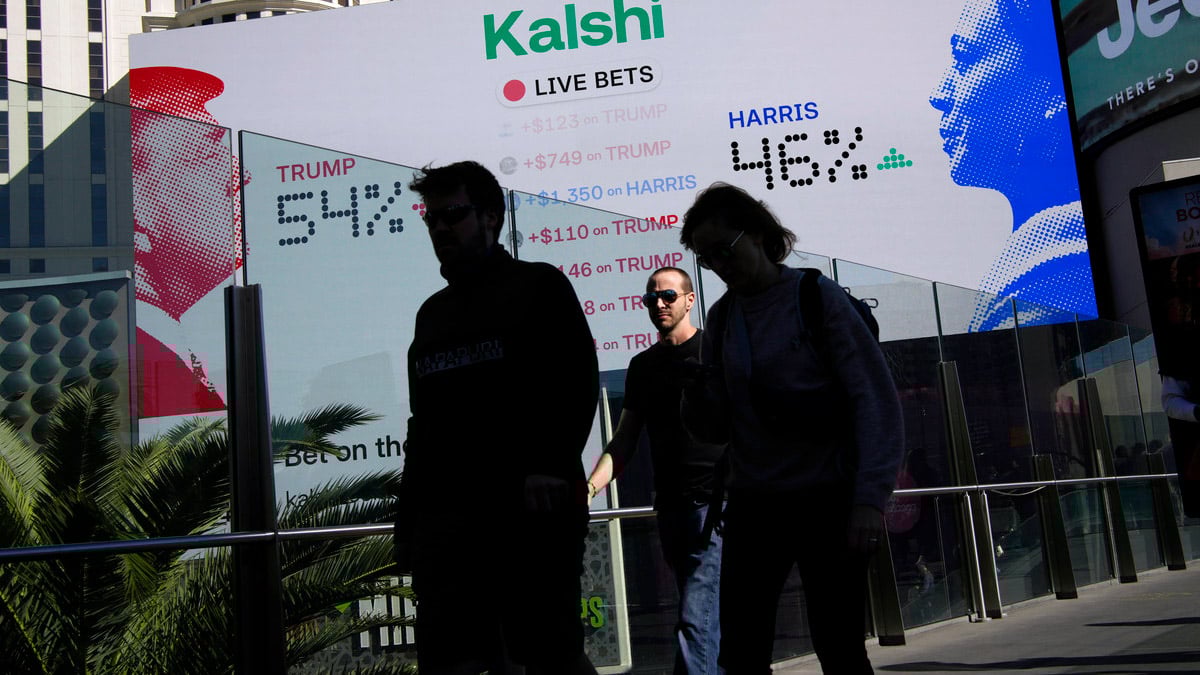
A U.S. federal judge has rejected a bid by prediction market operator Kalshi to halt Arizona’s criminal prosecution, marking the latest development in a widening legal battle over the status of event-based trading platforms.
The court denied Kalshi’s request to block the case and declined to rule that federal law overrides Arizona’s gambling statutes. U.S. District Judge Michael Liburdi said Wednesday it was too early in the case for him to rule on that issue.
The Arizona Attorney General’s Office has charged Kalshi with 20 misdemeanor counts of wagering, alleging the company accepted bets on political outcomes, college sports, and individual player performance.
State law prohibits operating an unlicensed wagering business and betting on elections, and the case represents the first time a state has brought criminal charges against the platform.
The dispute underscores a broader clash over whether prediction markets should be treated as gambling operations. Arizona contends Kalshi is operating an illegal betting platform in the state and has marketed itself as a platform for sports and election betting, accusing the company of flouting state law.
Kalshi maintains it is a financial marketplace rather than a gambling operation and argues its users trade contracts with one another rather than betting against the “house”. The platform allows customers to buy and sell “Yes” or “No” contracts tied to event outcomes, describing these transactions as “swaps”.
Alongside the criminal case, Kalshi is pursuing civil claims in federal court, arguing it should be regulated solely by the U.S. Commodity Futures Trading Commission. The company has also warned that the Arizona action could threaten its viability, undermine confidence in the integrity of its platform, and cause other problems for the business.
The case in Arizona is part of a broader multi-state legal fight. Kalshi has filed lawsuits against Arizona, Utah, and Iowa in an effort to block state-level enforcement, while other states have also taken action against the platform.
Court decisions so far have been mixed. Judges in Nevada and Massachusetts have sided with states seeking to restrict prediction market activity, while rulings in New Jersey and Tennessee have favoured Kalshi.
The legal battle has also drawn in the federal government, which has filed lawsuits against Connecticut, Arizona, and Illinois challenging their efforts to regulate prediction market operators. The administration of President Donald Trump has backed such platforms.
The issue has further political and commercial ties. Donald Trump eldest son serves as an adviser to Kalshi and Polymarket and is an investor in the latter, while Trump’s social media platform is preparing to launch a cryptocurrency-based prediction market called Truth Predict.
