



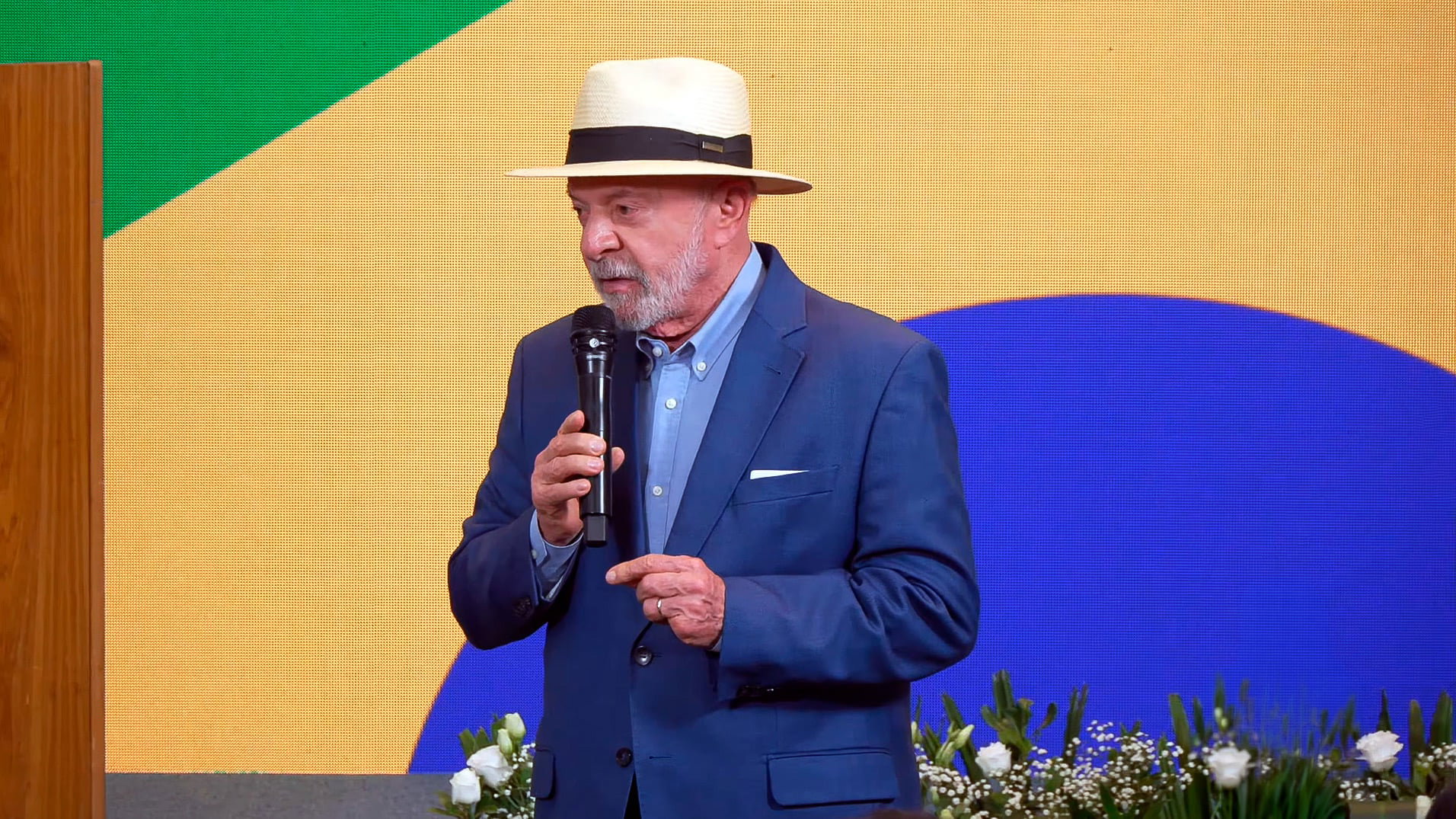
Brazilian President Lula da Silva has stepped up his criticism of online betting companies, increasingly presenting gambling as a social problem while aligning the issue with concerns raised by more conservative sections of Brazilian society.
Silva has repeatedly described betting companies as a “scourge of lies”, focusing his criticism on their impact on young people and low-income workers. He has also linked gambling to indebtedness and deteriorating labor conditions.
The president has indicated that he would favor ending the activity altogether, but has acknowledged that such a move would face political resistance. He has pointed to the influence of the industry in Congress as a significant obstacle to any attempt to abolish betting.
“I know there’s a gambling lobby in Congress,” he said. “But it is a fight we will have to take on, because society cannot be destabilised by something we can control.”
The federal government is meanwhile considering measures involving several ministries. The president said discussions are taking place with the ministries of finance, planning and justice as the administration evaluates ways to mitigate the social effects of betting. “We are working with the ministries so that we can take action,” he said.
Any move to eliminate the regulated industry would, however, have consequences for public finances. Gambling contributed nearly BRL7.3 billion ($1.4 billion) to government coffers in the first half of 2026. Brazil collected almost BRL10 billion from the activity during 2025, excluding concession and regulatory fees, meaning a ban would remove an established source of federal revenue and could add pressure to the budget.
Lula has continued to press his case publicly. During a speech at the Ministry of Labour, he characterized sports betting as a financial trap for workers, while interviews with two podcasts provided another platform for his criticism.
“If no one can show me a social justification for these betting platforms to continue, we have to put an end to them,” he declared.
Da Silva has used the betting issue to reinforce his support for formal employment and to criticize economic models that, in his view, exploit the financial vulnerability of the population. Opposition to betting has consequently become tied to his messaging on social protection and household indebtedness.
But a potential ban would raise questions about the illegal gambling market. Research by LCA and Instituto Locomotiva estimates that unauthorized operators already account for between 38% and 44% of total sports betting and online gambling activity. Prohibiting regulated betting would therefore not necessarily eliminate demand and could instead redirect players toward illegal operators.
Bernardo Freire, legal counsel for the National Association of Games and Lotteries (ANJL), has argued that removing licensed betting companies would amount to “complicity with crime” by strengthening the unregulated market.
Speaking at an ANJL event held with Grupo Globo, Freire warned that players currently using licensed operators could migrate to illegal platforms if regulated sites were shut down. “If 40% of the population is already in this market today, the ban will drive the 60% who bet on licensed platforms to the illegal ones,” he said.
