



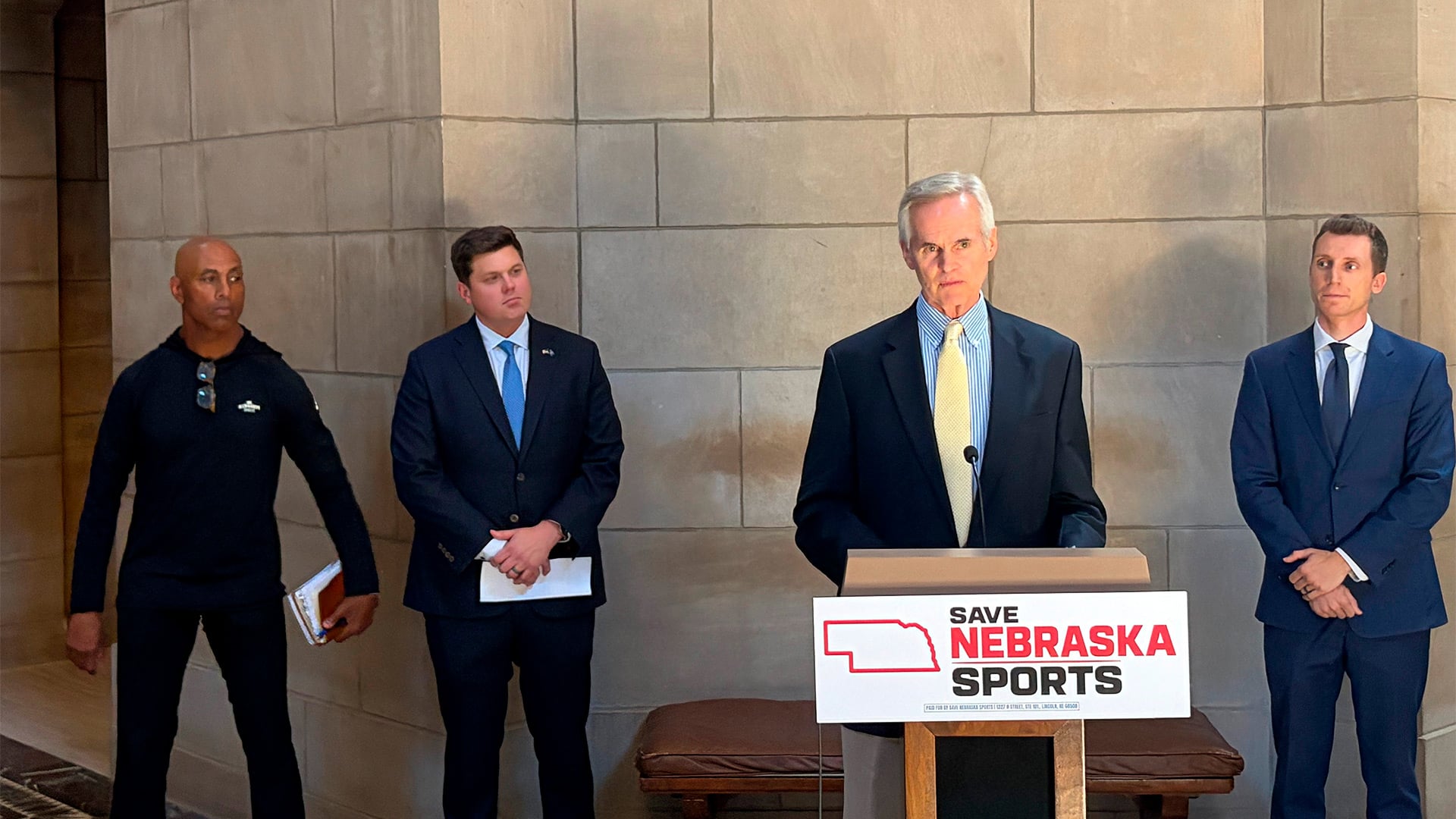
A new coalition called Save Nebraska Sports has launched a campaign opposing two online sports betting ballot measures set to appear on Nebraska’s November ballot, arguing that the proposed property tax relief would not offset the potential costs to residents and student athletes.
Nebraska Family Alliance Executive Director Nate Grasz said online betting platforms were seeking profits at the expense of families, businesses, fans and student athletes.
“They are seeking to make a profit at the expense of Nebraska families, businesses, fans and student athletes,” Grasz said.
Supporters of the ballot measures have argued that legalizing online sports betting would generate additional revenue for property tax relief. The coalition opposing the measures said the projected relief would not make a noticeable difference.
State Auditor Mike Foley said the projected tax relief would require Nebraskans to lose more money through betting than they would receive back.
“As state auditor, I feel an obligation to inform the cities you’re being scammed on a false promise of property tax relief,” Foley said, “which is very sensitive to you. False promise of getting tax relief when you’re not going to get it.”
State Treasurer Joey Spellerberg said the estimated $87 million in property tax relief would require Nebraskans to lose more than $435 million in bets. He also warned that legalization would increase betting-related messaging through apps, advertisements, promotions and notifications.
“It will follow us onto our phones through apps, advertisements, promotions, notifications, day and night,” Spellerberg said, “and this matters because our kids are going to grow up in this environment.”
Speakers at the State Capitol also highlighted recent NCAA surveys showing that 36% of men’s basketball athletes have experienced social media abuse.
Grasz read a statement from former Nebraska football coach Tom Osborne, who was not in attendance, about the pressure faced by student athletes when betting markets are tied to their performances.
“As a coach, I saw firsthand the immense pressure student athletes face,” Grasz read. “Some of the harshest criticism athletes receive is not for losing, but for failing to beat a point spread or reach a certain number of yards, completions or touchdowns. Online sports gambling turns an athletic contest into a gambling exercise with someone else’s money riding on the performance of young men and women.”
