



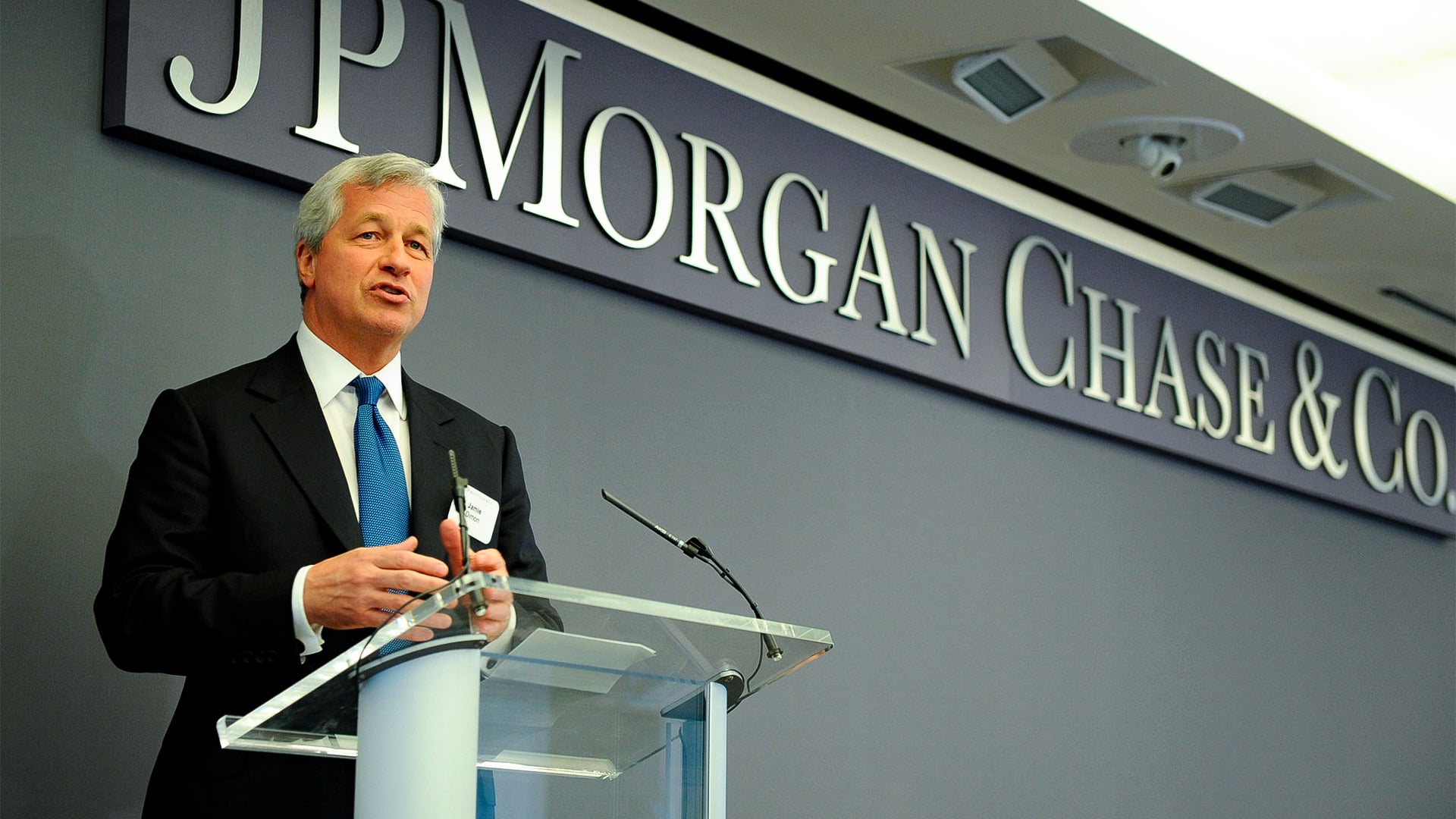
JPMorgan Chase CEO Jamie Dimon said the bank is considering entering the prediction markets space, though any move remains tentative and would exclude certain types of contracts.
“It’s possible one day we’ll do something like that,” Dimon said in an interview with CBS Evening News, referring to services like Kalshi and Polymarket, which allow users to trade on the outcomes of future events.
Dimon made clear that if the largest U.S. bank were to proceed, it would avoid some of the most prominent categories in the sector. “We’re not gonna be in sports. We’re not gonna be in politics. There’s a bunch of stuff we won’t do. And obviously, we have strict rules around insider information,” he said.
Prediction markets, which enable participants to take positions on yes-or-no outcomes, have drawn growing interest from traditional financial firms. They have also drawn scrutiny from several state regulators, who consider the vertical a form of unregulated gambling.
“I think for the most part, it’s more like gambling,” Dimon said. “But there are areas where you could say, ‘No, it’s investing.’ You are deeply knowledgeable. You’re taking the other side of a bet. And you think … you know better than the other person.”
Dimon also added that he does not oppose gambling in principle, noting its long history across societies. “People have been gambling forever … every country I’ve ever been in, people gamble,” he said. “I’m against it if it’s an addiction that ruins your life type thing.”
“I’m a little bit of a libertarian. You have the right to do what you want, the way you want. You know, just take care of yourself,” he added.
Any entry by JPMorgan Chase would likely draw on its existing strengths in asset classes such as commodities, currencies, and interest rates, potentially focusing on financial and economic contracts rather than sports-related derivatives.
Interest in prediction markets has been rising on Wall Street. Intercontinental Exchange, which owns the New York Stock Exchange, recently increased its investment in Polymarket to $2.6 billion, while Kalshi, the largest U.S. prediction market, is moving toward offering margin trading to attract institutional investors.
Separately, reports have indicated that JPMorgan is considering internal guidelines governing how its employees interact with prediction market platforms, underscoring the bank’s cautious approach as it evaluates the space.
