


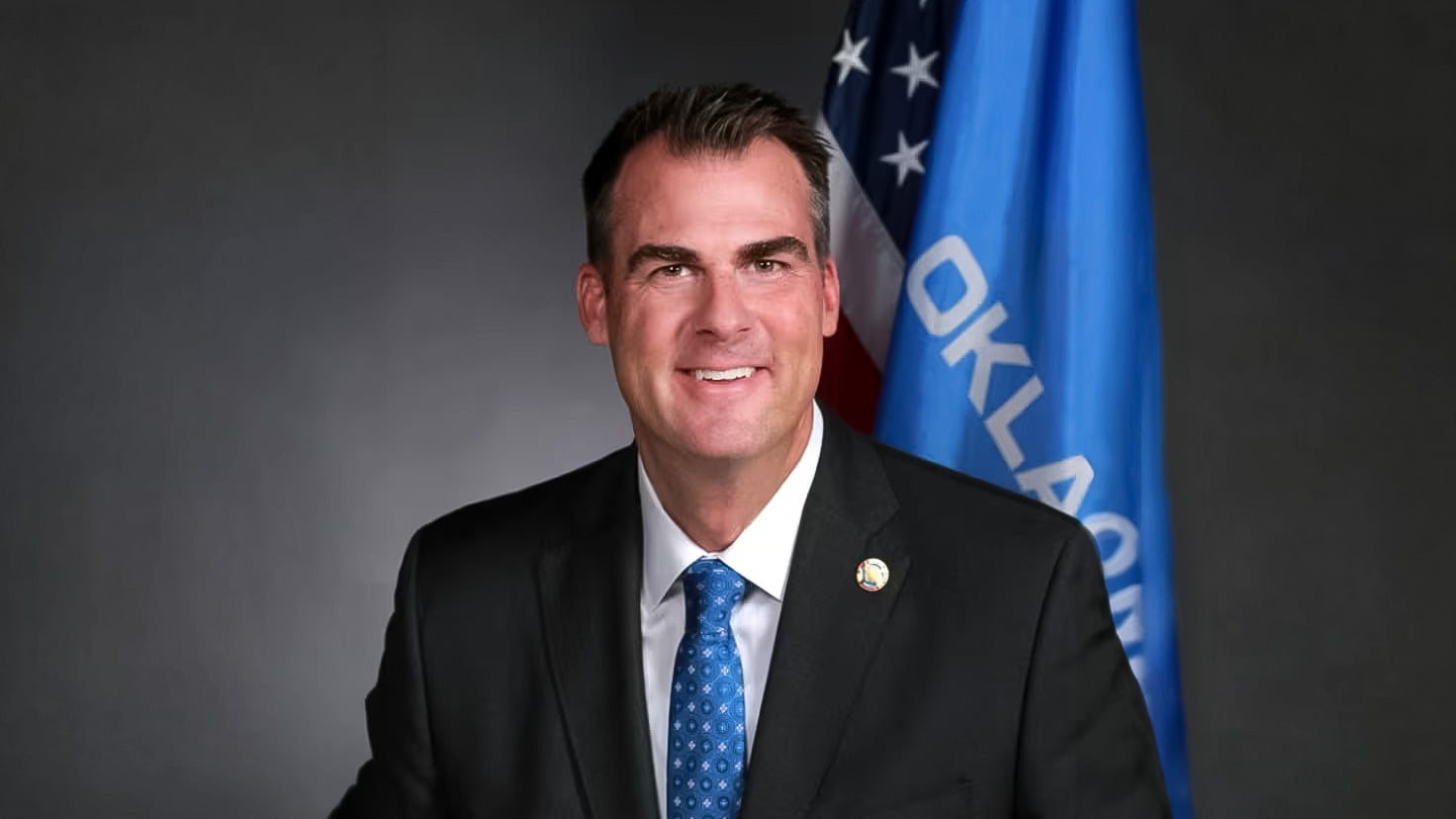
Oklahoma’s effort to restrict online sweepstakes casino models has stalled after Gov. Kevin Stitt vetoed Senate Bill 1589, leaving unregulated online casino websites and apps accessible in the state.
The veto, recorded on the Oklahoma State Legislature’s website on May 7, came after SB 1589 cleared both chambers with wide support. The Senate approved it 48-0 in March, while the House passed it in early May.
Introduced by Tulsa Republicans Sen. Todd Gollihare and House Speaker Pro Tempore Kyle Hilbert, the bill sought to criminalize online social casino games using dual-currency systems.
Such structures, commonly used by sweepstakes casinos, typically involve one coin type for play and another that can be tied to prize redemption or cash withdrawals.
The bill described online casino games as “any gambling game” involving a “representative of value,” including “any and all currency used as part of a dual-currency system of payment that allows a person to exchange such currency for any prize, award, cash, or cash equivalent, or any chance to win any prize, award, cash, or cash equivalent.”
Under SB 1589, delivering or promoting unregulated gaming, including online sweepstakes casinos, would have been treated as a Class C2 felony, carrying possible fines of $500 to $2,000 and jail terms of up to 30 days. Its liability provisions also extended to owners of geolocation providers, gaming suppliers, platform providers, promoters, and affiliates.
The measure exempted activity conducted on Indian lands in compliance with the Indian Gaming Regulatory Act and preserved gaming covered by the Oklahoma Charity Games Act.
Stitt said the bill went too far by exposing online gaming operations and app developers to felony penalties. He argued that Oklahoma could protect consumers from illegal gambling without threatening social gaming, online promotions, or marketing tools.
The governor also questioned whether the “representative of value” definition was too broad, raising concern that it could affect online retail promotions, including a shopper spinning a wheel for a discount code. He concluded that the bill would have created uncertainty.
Lawmakers have until May 29 to attempt an override. A two-thirds majority is required in each chamber, meaning 32 Senate votes and 67 House votes if all 101 House members participate.
The veto followed the defeat of House Bill 1047, a separate proposal to legalize sports betting through tribal operators. The bill failed in the Senate on April 22 by a 21-27 vote.
Backed by the Oklahoma City Thunder and the Oklahoma Indian Gaming Association, HB 1047 would have allowed tribal nations to offer retail and mobile sports betting, with tribes holding exclusive authority and the state receiving 8% of sports betting earnings. NBA and WNBA betting revenue would have gone to the Strong Readers Act Fund.
Supporters called it a regulated alternative to betting already available through other channels. Opponents cited gambling addiction, while Stitt’s office opposed expanding the tribal gaming compact, which local media reported it criticized over transparency and market-rate concerns.
