


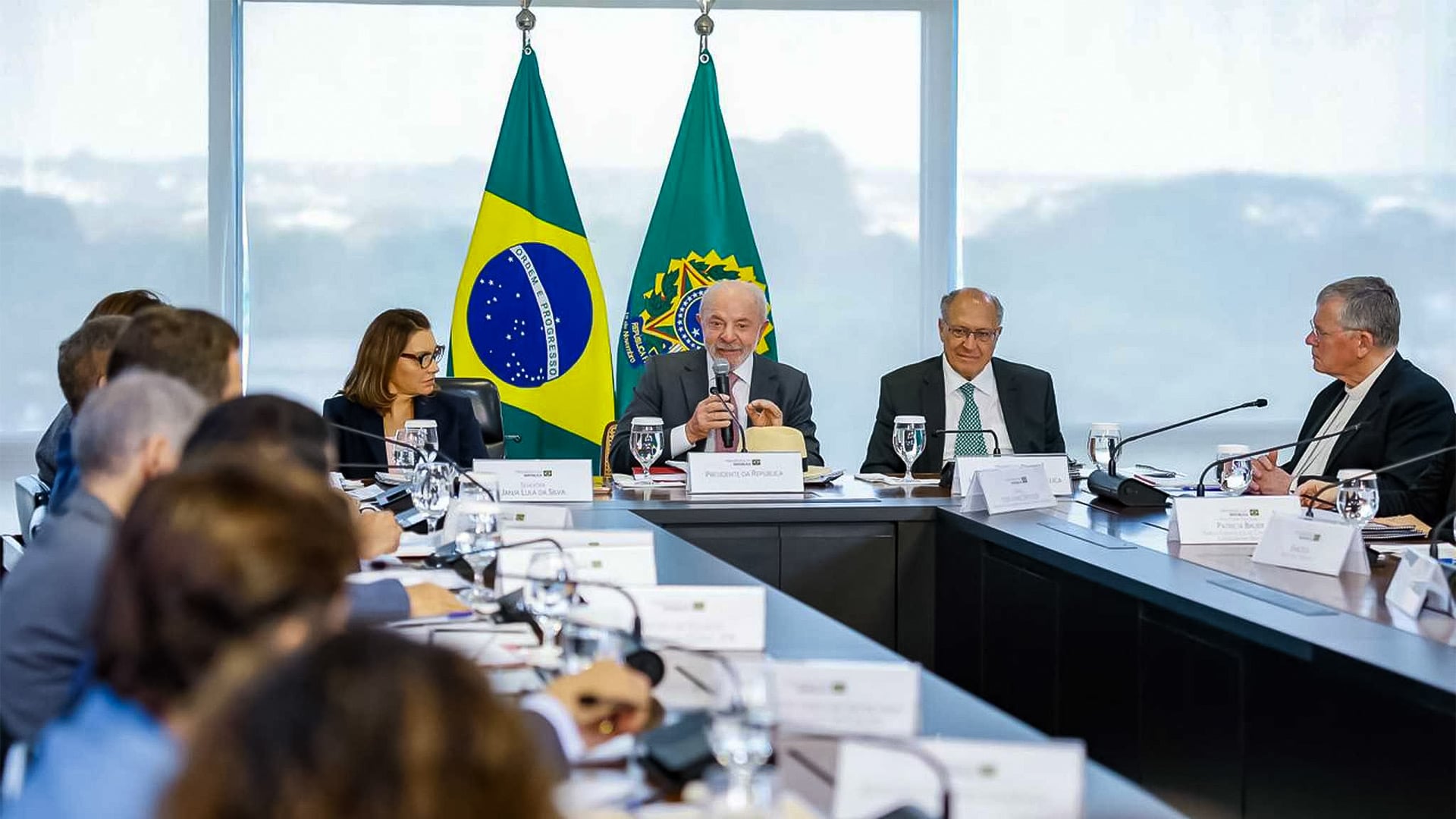
Brazil’s online betting market is awaiting the signing of the provisional measure (MP) this Friday, September 25, which could ban betting. According to CNN, President Luiz Inácio Lula da Silva is expected to make the official announcement during an event in São Paulo.
A candidate for re-election, the president has made the fight against online betting one of the main banners of his campaign and has intensified his criticism of the sector in recent weeks.
On September 18, during an event in Guarulhos, the president said he had decided to “end betting.” On Tuesday, September 22, during the opening of the United Nations (UN) General Assembly, he also said that Brazil “will not tolerate” a business model that, according to him, “turns addiction into profit.”
The offensive comes just over a week before the first round of the elections, scheduled for October 4. Information published in recent weeks indicates that members of the government view the measure as a response to the population’s debt problem and as an issue to present ahead of the vote. At the same time, part of the government’s economic wing has expressed concern about the fiscal effects of a ban.
The Minister of Finance himself, Dario Durigan, had previously advocated a stricter regulatory approach, but had warned about the risks of a broad ban. In June, before the electoral period, Durigan told UOL News that he feared a general prohibition would strengthen an illicit and unregulated market.
Legal challenges on the horizon
One of the main questions surrounding a potential ban is how companies that received authorization from the government itself to operate in the country would be treated.
The regulated market began operating in 2025, following the federal government’s regulatory process. Authorized companies paid BRL 30 million (USD 5.79 million) for the license, with the right to operate for five years. An early interruption of the authorized period could trigger a dispute over whether those amounts should be refunded and whether companies should be compensated for investments and revenues that would no longer materialize.
The possibility of legal action had already been discussed since the government began considering a ban on online casinos. The Brazilian Institute for Responsible Gaming (IBJR), one of the organizations representing the sector, has publicly acknowledged the possibility of challenging Lula’s MP in court.
Meanwhile, the government is reportedly considering not refunding the BRL 30 million (USD 5.79 million) paid by each company. According to an investigation by SBT News, a government source argued that the companies “have already made a lot of money” and that obtaining the license was a commercial decision made by the operators themselves. If this position is incorporated into the final text, it will likely become one of the central points of the legal dispute.
The impact on football
Football is also at the center of the discussion. A potential ban would directly affect a chain of contracts between betting companies, clubs, competitions, federations, broadcasters and other sports stakeholders.
In the Brazilian top flight, more than half of the clubs have betting companies as their main sponsors. There were 13 teams at the beginning of this week, but Grêmio announced a deal with the Pitaco platform, bringing the total to 14. Investments in the teams exceed BRL 1 billion (USD 192.6 million).
Amid the possibility of restrictions, the clubs released a joint manifesto last week defending the continuation of the regulated market.
Corinthians, Flamengo, Palmeiras, São Paulo, Vasco, Cruzeiro and other teams argued that an abrupt change in the rules would affect legally established contracts, multi-year plans and financial commitments made on the basis of the regulatory framework created by the state itself.
For the clubs, the alternative should be to fight illegal betting, through enforcement and consumer protection mechanisms, without eliminating the authorized market.
Lula responded to the manifesto. During his speech in Guarulhos, the president criticized the clubs’ dependence on betting companies and said that Brazilian teams had won major titles before betting existed.
The issue has already moved beyond statements. According to a report published by UOL, some betting companies have begun sending out-of-court notices to sponsored clubs about the possibility of terminating their contracts if the government bans sports betting and online gaming.
In response to the potential financial impact, the government is considering opening a negotiation forum to discuss measures aimed at clubs that would lose sponsorship revenue. Brazilian media have also reported that the government is examining financial support mechanisms and debt refinancing for clubs.
The illegal market is another pressure point
Another argument raised by the sector is the risk that clandestine platforms could grow.
The government is not ignoring this risk. According to information released Thursday, the Office of the Attorney General of the Union (AGU) and the Ministry of Justice are studying mechanisms to prevent a potential ban from simply shifting bettors from regulated platforms to illegal operators. Possibilities include tougher penalties for those promoting illegal gambling.
The government would also have to deal with the loss of tax revenue. In 2025, for example, the sector paid BRL 9.95 billion (USD 1.916 billion) in taxes to the federal government; this year, the amount has reached BRL 9.9 billion (USD 1.908 billion) through August, already exceeding the 2025 total.
A 2004 precedent
If the betting ban does go ahead, Lula would partly repeat a strategy adopted by his own government in 2004, when the president decided to ban physical bingo halls in Brazil, also through a provisional measure (MP).
The difference is that this time, the decision would affect a market recently regulated by Lula’s own administration, with companies that received authorization to operate for five years and have already established contracts with clubs, suppliers, payment companies, technology providers and media organizations.
The publication of the MP would not end the debate. As a provisional measure, the text takes effect as law immediately, but must be reviewed by the National Congress to remain in force. The constitutional period is 60 days, extendable once for an equivalent period if the vote is not completed.
Congress can approve, reject or amend the text during the legislative process. At the same time, companies and industry organizations could challenge the measure in court, particularly regarding licenses, existing contracts and rights arising from authorizations granted by the state itself.
Therefore, rather than simply determining the future of betting, the MP could open a new institutional dispute between the Executive, Congress, licensed companies, clubs and other sectors that have become part of the betting economy since regulation.
The final text will therefore be decisive. Until it is published, questions remain open regarding the exact scope of the ban, the timeline for shutting down operations, the status of licenses already paid for and the mechanisms the government intends to use to prevent the illegal market from expanding.
